Time has slowed.
Retail shops, commercial enterprises, government offices, are all at a standstill. Main Street is dead.
Activity is not.
The sound of traffic is reduced, almost negligible. But it is not silent. The sounds of motors running, tires screeching and horns honking have been replaced with birds chirping and church bells tolling. I would rather listen to those than the traffic. I will be a bit sullen when the traffic noise returns and overtakes my birds and bells.
While the streets are deserted, they are not exactly silent. Although you do not hear the general murmur of conversation, you do hear people. Oddly, they are yelling. But they are not angry. There is love, tenderness, wistfulness in their voices, as they yell up to elderly relatives two or three stories above, shut in against contagion. Or, you hear the elderly shouting down, saying what they need or how they’re feeling or what they were busy watching on TV. Standing on the roadway, yelling to catch up on how everyone is doing, is the vogue family gathering.

“I haven’t seen you in two weeks, my you have grown!”, a grandfather exclaims from the window.
“Daddy bought me two presents,” his grandson replies excitedly, waving his little arm back and forth so rapidly it may fly off at the elbow. “Look, look, Daddy’s coming down the street now!”
All heads in the street and above in the window turn and wait, eagerly, expectantly, as if a man had never successfully walked down the street before. Daddy looks a bit embarrassed and guilty, as if he should be doing something that will provide greater entertainment.
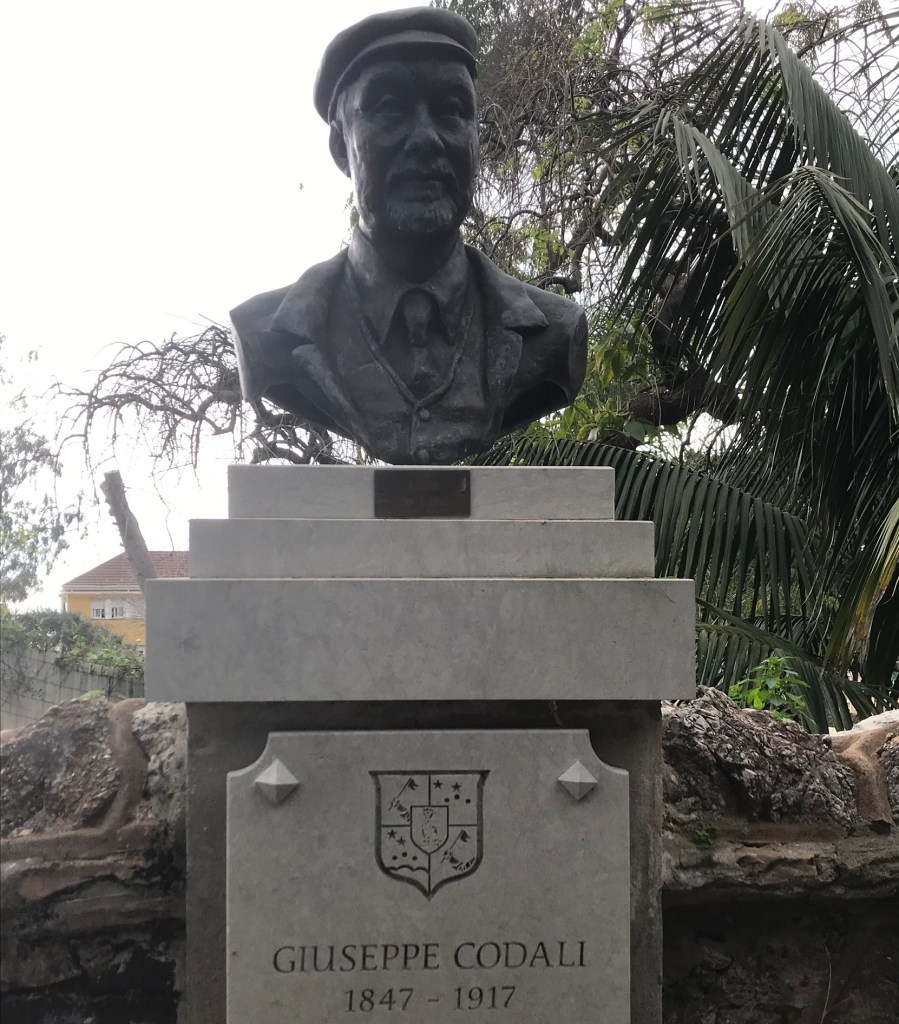
They are not the only ones that notice things in greater detail now. One of my walking routes is through the Alameda Botanic Gardens. No matter which of the several paths in the gardens I take, I always end up wandering to the bridge and pausing, looking down into the sunken garden below. The other day, coming upon the bridge, I paused and looked at the bust at the entrance.
“Giuseppe Codali, 1847-1917. Garden Designer, Horticulturalist, and Head Gardener of Alameda Gardens. Originally from Bergamo Italy…”.
What?! Bergamo? I read it again. Yes. Bergamo.
Bergamo is a province in Italy. As of the end of March, it was the world’s deadliest centre of the Covid-19 outbreak. It is here that the daughter of a 75 year-old woman called the ambulance, and listened as they told her that her mother must stay home because the hospital was already overflowing, and the priority was for younger patients. So the daughter watched helplessly as her 75 year-old mother died in her home, untreated. Yes, it is here that even in the hospital, doctors had to choose which patients would be treated, and which were left to die.
It is here that priests in villages made the decisions to ring the death knell only once a day, or the bell would ring incessantly all day long. It is here that mourners were banned from gathering together to grieve their dead. That is, if they have them, for it is here that army vehicles were commissioned to transport corpses to other cities.
It is here that a woman over 70 went into the hospital with the virus, and her husband went a few days later. They did not know they were in the same hospital, only a few floors apart. He did not see her before she died, and his children did not tell him when she died for fear it would be too much. He recovered, and left hospital. As he recovered further at home, he spent his time on the phone trying to find out where her body had been taken.
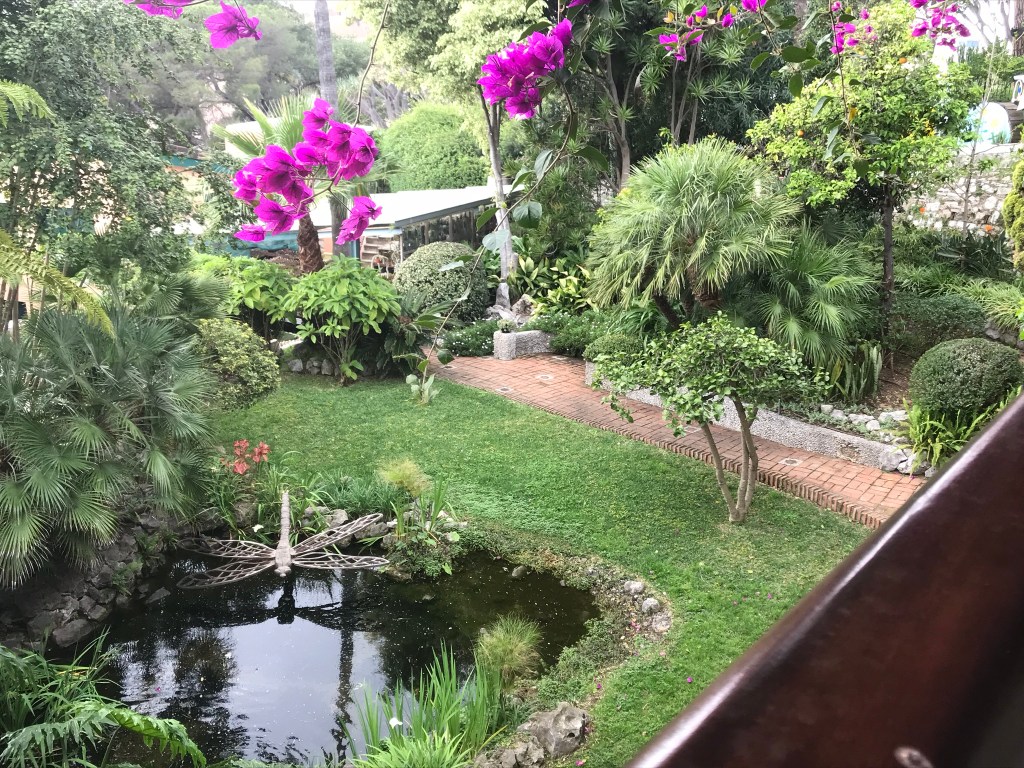
I thought of the death chaos in Bergamo and its catastrophic stories as I stood looking down below at total peace and serenity. Mr. Codali’s gift to Gibraltar had been the design and cultivation of this tranquil sunken garden. It seemed appropriate that the air was still but heavy with mist, and no bird sang. I held a moment of silent reverence for Bergamo.
There are signs of promise.
The number of daily deaths is decreasing in some of the most stricken countries, as is the increase in the daily infection rate. Today, Italy and Spain have started to lift their restrictions, just a little. As everyone watches and hopes, there is worry of a second wave.
In one of their articles on April 7, 2020, the New York Times described the following four benchmarks that ought to be met before cities should start to reopen:
- Hospitals must be able to safely treat all patients requiring hospitalization, without resorting to crisis standards of care. That means having adequate beds, ventilators and staffing.
- Authorities must be able test at least everyone who has symptoms, and to get reliable, timely results.
- Health agencies must be able to monitor confirmed cases, trace contacts of the infected and have at-risk people go into isolation or quarantine.
- Because it can take up to two weeks for symptoms to emerge, there must be a sustained reduction in cases for at least 14 days.
Is it too soon? Also today, China recorded its greatest number of new cases in six weeks.
While it is not the news we will want to hear, maybe its appropriate to recall the old fable of the tortoise and the hare. Remember how the race started and the hare took off, pulling well ahead of the tortoise? And then to mock the tortoise, the hare curled up by the side of the road and took a nap? But he slept so peacefully that he did not notice the tortoise passing him by, and by the time he awoke the hare could not catch the tortoise in time to win the race.
The lesson I was taught as a child is that slow and steady wins the race.
Do we pay attention to this lesson? Or do we forge ahead because the distortion of our lives has been too great?
 Tammy Perlich Writes